
Best Time to Visit Uluru: Weather, Climate, and Seasons
Most people picture the Red Centre as a furnace that never cools down, but the desert plays tricks on you. I learned that the hard way on a freezing June dawn at the sunrise viewing platform, shivering uncontrollably through a wool sweater while waiting for the sandstone to turn rust-orange. Finding the best time to visit uluru really comes down to what kind of discomfort you are willing to trade off, whether that means frosty mornings, swarms of bush flies, or afternoon heat that knocks the wind right out of your lungs.
The climate at Uluru is semi-arid, which is a polite way of saying it swings between extremes. Temperatures can dip below zero in July and soar well past 40 degrees Celsius in January. If you show up during the wrong week without the right gear, you will spend your entire holiday hiding inside air-conditioned tour buses. Here is an honest breakdown of the weather, the Anangu seasonal rhythm, and when you should pack your bags.
Book your australia uluru tour experience:
Understanding the Climate at Uluru and the Red Centre
The desert weather does not follow the classic European four-season rhythm. European calendars try to cram everything into summer, autumn, winter, and spring, but that does not reflect how Central Australia breathes. The local Anangu people recognize five distinct seasons based on wind patterns, animal breeding, and plant cycles. Knowing those shifts gives you a much clearer idea of what you will actually face on the ground than any standard 30 day forecast.
Piriyakantu runs from August through late September. The southerly winds die down, honey grevillea blooms, and animals begin breeding. Then comes Mai Wiyaringkupai around October and November, when the heat cranks up and fruit ripens on desert bushes. Itanpa hits between December and February, bringing scorching days, fierce storms, and sudden bursts of purple desert pea across the dunes. Kaka arrives around March, bringing cooler evenings before Wanitjunkupai settles in from May to July with sharp cold winds and heavy frosts.
If you keep an eye on the broader Alice Springs climate, you will see a similar trend. Uluru sits about 450 kilometers southwest of town, so while Alice Springs temperatures by month track fairly close to Ayers Rock, the monolith often feels harsher because you are standing out in wide-open, treeless red dirt with nowhere to hide from the sun. The average temp in Alice Springs might read 20 degrees on an autumn afternoon, but when you are walking beside a massive sandstone monolith reflecting heat straight back into your face, it feels five degrees hotter.
Pro tip: Pick up an inexpensive fine-mesh head net from the resort petrol station for about $10 before you do anything else. When the spring flies swarm your eyes and mouth, it will be the best ten bucks you ever spent.
Winter at Ayers Rock: May to August
Winter brings the clearest skies of the year. Peak tourist numbers hit between June and August for good reason, since daytime temperatures hover around a very comfortable 20 to 23 degrees Celsius. You can complete the full 10-kilometer Uluru base walk in the middle of the day without suffering from heat exhaustion, which is completely out of the question during the warmer months.
The catch is the nighttime cold. Winter nights drop down to 3 or 4 degrees, and sub-zero frosts are common in July. Dew freezes on windshields. You get out of bed at 5:30 am to catch the sunrise, step outside, and the dry air cuts right through your clothes like a razor. If you plan on camping or glamping in a safari tent, you will need thermal underwear, a heavy beanie, and a sleeping bag rated for sub-zero conditions. Do not let the daytime sunshine trick you into leaving warm layers behind.
There is also the matter of crowds. Because the weather in Ayers Rock in July is so mild, thousands of travelers flood in every week. Sunrise carparks fill up 45 minutes before first light. Accommodation prices peak across the board, so if you want to book places to stay around Ayers Rock Resort, you need to lock those rooms down at least six months out. Even dinner reservations get snapped up weeks ahead.
Are you hoping to see snow at Uluru? People search for Ayers Rock snow all the time after seeing old hoax photos on social media. It does not snow here. Frost coats the spinifex clumps in white ice on July mornings, making the landscape look silver, but you will never see actual snowflakes falling on the rock.
Shoulder Seasons: Autumn and Spring
If you ask frequent desert travelers for their secret, they will usually point to April or September. Autumn brings a deep, steady calm to the Red Centre. March can still carry the lingering stickiness of late summer, but by mid-April the afternoon highs settle around 28 degrees, the nights cool down nicely, and the wind drops. The skies stay deep cobalt blue for weeks on end.
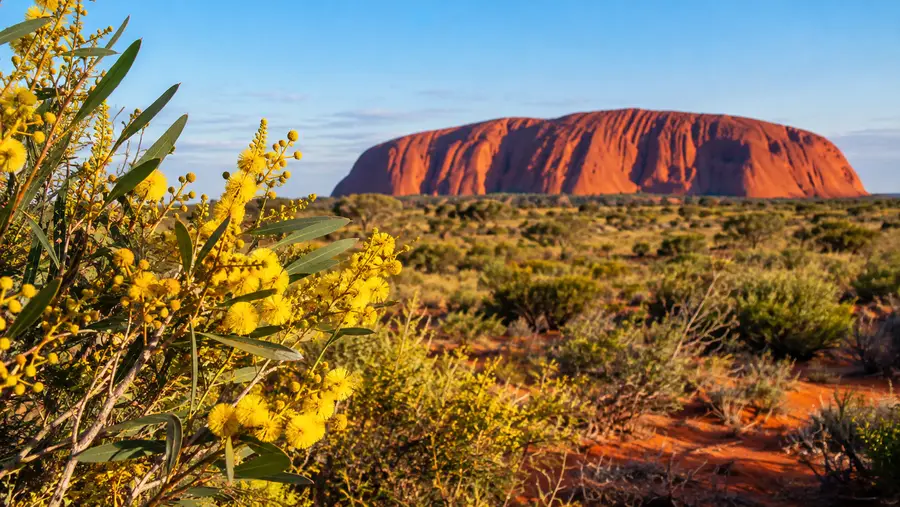
Spring tells a different story. Uluru weather in September feels fresh, yet the change happens fast. By late October, the thermometer easily pushes 34 degrees. The landscape erupts with yellow acacia blossoms and noisy honeyeaters, which looks stunning against the red sand. Yet spring also wakes up the true rulers of Central Australia: the bush flies.
They do not bite, but they are relentlessly curious about the moisture on your eyelids, lips, and nostrils. They appear by the millions the second the sun heats the ground past 26 degrees. A morning hike can turn into a frantic arm-waving marathon if you forget your fly net.
Spring and autumn offer several distinct advantages over winter:
- Fewer bus tours: crowds thin out significantly outside of the mid-year school holiday rush, meaning quieter trails and empty viewing platforms.
- Warmer pool days: the hotel swimming pools are actually warm enough to swim in after a dusty afternoon walk, which is rarely true in chilly June.
- Cheaper rates: resort rooms and budget campervan rentals often drop their rates slightly between late March and early May.
- Stargazing comfort: night sky tours feel pleasant in April and October because you do not have to shiver through the presentation.
Note: Walking tracks around the base close down automatically at 11:00 am whenever the temperature hits 36 degrees Celsius. If you visit in late October or November, you must start your hikes at dawn to finish before rangers lock the gates.
Book your australia uluru tour experience:
Summer Heat and the Rare Magic of Uluru Rain
December to February is undeniably brutal. The thermometer routinely climbs above 38 degrees Celsius, and 43-degree scorchers are common. The air feels like an open pizza oven. Between 10:00 am and 5:00 pm, the desert simply shuts down. You cannot hike safely in that kind of heat, wildlife hides deep inside rock crevices, and tourists retreat to air-conditioned hotel rooms.
Still, summer holds a dramatic secret that draws a specific breed of traveler. It is the wet season in the Centre. When a tropical monsoon trough dips south from Darwin, the desert undergoes an astonishing transformation. Rain over Ayers Rock is a rare event, happening only a handful of days each year, but when a genuine rainstorm rolls over the monolith, it becomes unforgettable.
Water sheets down the 348-meter sheer walls, creating hundreds of spontaneous, roaring waterfalls. Grey stone turns glossy charcoal black. The air fills with the sharp, clean perfume of wet red earth and soaked mulga trees. Frogs that have lived buried under the dirt for three years suddenly dig their way out to breed in temporary rock pools. A true Uluru flood cut the access road for two days back in 2016, turning the desert floor into a temporary inland sea. Seeing lightning strike beside the rock during an afternoon thunderstorm is easily one of the most intense sights in the southern hemisphere.
If you are brave enough to travel during the summer months, prepare yourself thoroughly:
- Carry excessive water: drink at least one liter for every hour you walk outside, even if you feel fine.
- Wake before dawn: do your scenic drives and light walks between 5:30 am and 9:00 am, then stay indoors until dusk.
- Expect track closures: expect trails to be shut down by park rangers due to extreme heat or localized flooding.
- Check road conditions: check local park alerts daily because heavy rain can easily wash out unsealed outback roads.

Uluru Weather by Month and Average Temperatures
To help you weigh the trade-offs between daytime warmth, evening chill, and crowd levels, look at how the averages shake out across the calendar year. Keep in mind that desert conditions shift quickly, so these numbers represent long-term averages rather than guarantees.
| Month | Avg High (°C) | Avg Low (°C) | Rainy Days | Crowd & Fly Level |
|---|---|---|---|---|
| January | 38°C | 21°C | 4 | Low crowds, high flies, extreme heat |
| February | 36°C | 21°C | 4 | Low crowds, high flies, storm chances |
| March | 34°C | 17°C | 3 | Moderate crowds, flies beginning to drop |
| April | 28°C | 12°C | 2 | Great balance, pleasant days, cool nights |
| May | 23°C | 8°C | 3 | Busy, crisp mornings, zero flies |
| June | 20°C | 5°C | 2 | Peak season, chilly wind, freezing nights |
| July | 20°C | 4°C | 2 | Busiest month, sub-zero frosts, very clear |
| August | 23°C | 6°C | 2 | High crowds, warm afternoons, frosty dawns |
| September | 28°C | 10°C | 2 | Wildflowers bloom, flies return, lovely days |
| October | 32°C | 14°C | 3 | Moderate crowds, hot walks, high flies |
| November | 34°C | 18°C | 3 | Low crowds, very warm, afternoon storms |
| December | 37°C | 20°C | 4 | Quiet, intense sun, possible summer rain |
When you break the numbers down, you realize there is no magic month where every single condition is flawless. You are always balancing the heat against the crowds. If your body wilts in temperatures over 30 degrees, stick strictly to May through August. If you cannot stand shuffling down a boardwalk behind thirty people wearing matching tour hats, aim for late April or early September. The desert demands flexibility, and knowing your own tolerance limits makes all the difference.
Frequently Asked Questions about best time to visit uluru
What is the single best month to visit Uluru?
May is arguably the best month overall. Daytime highs sit around a mild 23 degrees Celsius, the relentless summer bush flies have disappeared with the arrival of cold nights, and the peak winter tourist rush has not reached full madness yet.
What is the worst time to visit Uluru?
January and February are tough for most travelers. Daily temperatures frequently soar past 40 degrees, morning walks are cut short by mandatory heat closures at 11:00 am, and the bush flies are thick and persistent.
Can you see waterfalls at Uluru during the year?
Waterfalls only appear on Uluru during or immediately after heavy rainstorms, which happen irregularly throughout the year. Your odds are slightly higher during summer tropical storms from December to March, but it remains a rare, lucky event.
Quick Reference
- Sweet-spot months: May and September
- Peak crowds: June through August
- Coldest nights: July (regular sub-zero frost)
- Hottest months: December through February (often 40°C+)
- Fly season: October through March
Book your australia uluru tour experience:
My Take: When Should You Actually Go?
If this is your once-in-a-lifetime trip to Central Australia, book your visit for the middle of May. You will get sunny, mild days for hiking the trails, crystal-clear night skies for stargazing, and you will miss the worst of both the blistering summer heatwaves and the July tour-bus congestion. Just pack a proper down jacket alongside your sun hat, stay flexible with your morning alarms, and let the desert set the pace.
Read more about australia uluru tour.