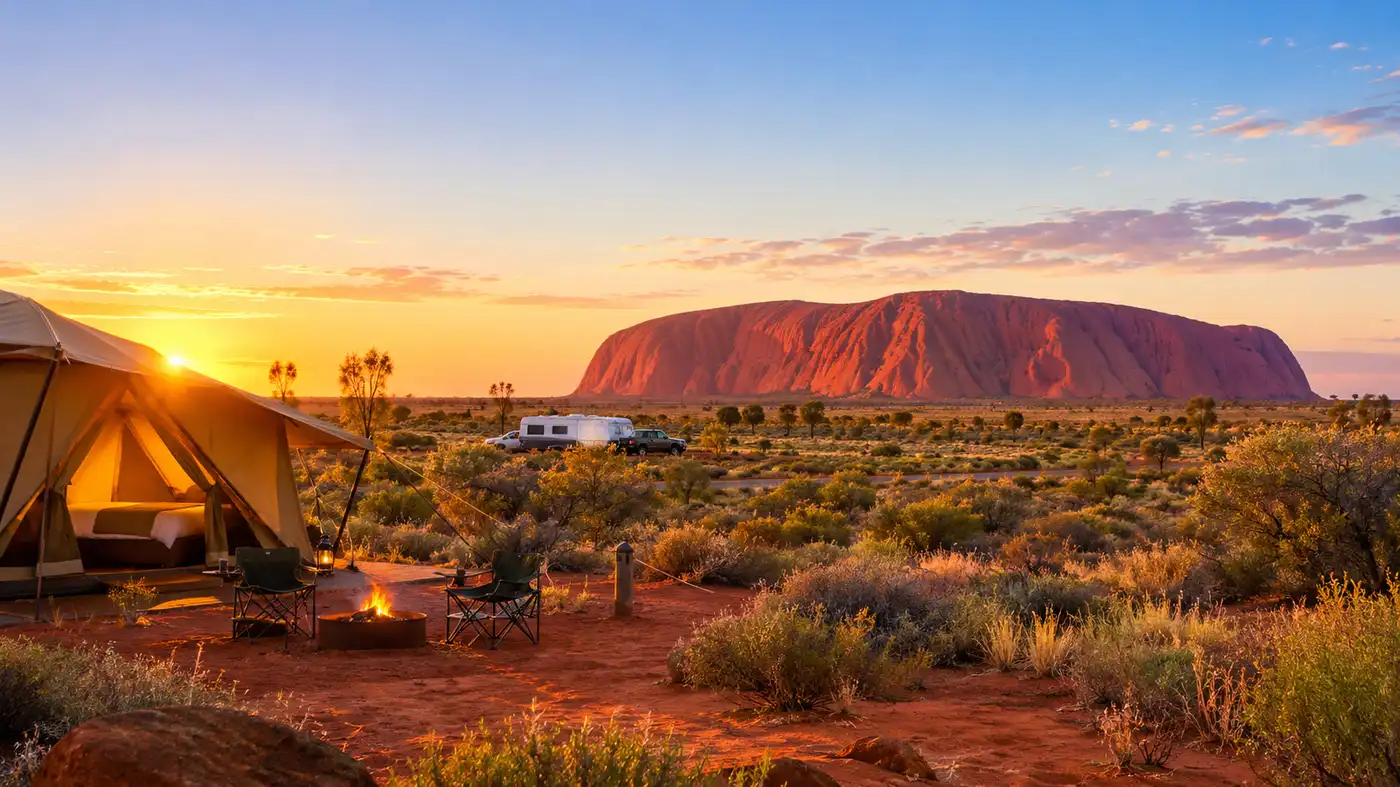
Camping at Uluru: Campgrounds, Caravan Parks, and Glamping
Red dust gets into everything out here. You will find it in your socks, deep inside your cutlery drawer, and ground into the tread of your hiking boots three weeks after you return home. Pitching a tent or parking a campervan under the desert sky gives you front-row seats to the sharp, quiet beauty of the Red Centre, but uluru camping requires some deliberate planning because you cannot simply pull over and roll out your swag wherever you please.
Strict conservation laws protect the sacred landscape of Uluru-Kata Tjuta National Park, meaning you cannot sleep inside the park gates unless you are on a licensed commercial trek. Almost everyone heading out this way ends up staying at Yulara, the resort town situated about fifteen minutes north of the park boundary. Whether you want a patch of native grass for a two-man tent, a powered concrete slab for a fifteen-foot caravan, or a five-star glamping pavilion with champagne on ice, this guide breaks down the real terrain.
Book your australia uluru tour experience:
The Main Hub: Ayers Rock Campground at Yulara
If you plan to stay close to the monolith, you will almost certainly stay at the Ayers Rock Campground. Located along Yulara Drive, this sprawling park is managed by Voyages Indigenous Tourism Australia as part of the broader Ayers Rock Resort complex. It remains the only formal campground within striking distance of the national park entrance.
The layout is divided into distinct zones. Toward the front, you find rows of powered vehicle sites shaded by native desert oaks and eucalyptus trees. Further back lies an expansive, unpowered lawn area where swags and tents cluster together in loose clusters. There are also simple two-bedroom air-conditioned cabins tucked away near the boundary fences for travelers who want the camp vibe without dealing with canvas in forty-degree heat.
Honesty matters here: this is a busy commercial operation. Over three hundred caravans, camper trailers, and roof-top tents roll through the boom gates on an average winter afternoon. It does not feel like remote wilderness camping when fifty generators cut out at 9:00 PM and the shower blocks echo with children washing red sand off their legs. The proximity to the park entrance makes the compromise worth it for most road-trippers.
Note: Free camping, wild bush camping, and sleeping in your vehicle along roadsides inside Uluru-Kata Tjuta National Park are strictly illegal and heavily patrolled by park rangers.
Ground conditions vary across the property. Some powered sites have concrete pads with small patches of gravel, while others are compacted red earth that turns into stubborn paste during rare desert downpours. Bring strong steel tent pegs. The standard wire pegs that come inside retail tent bags bend instantly against the baked desert soil. If you are hauling a caravan or camper trailer, self-containment makes your stay much smoother, though the park amenities are maintained well enough given the sheer volume of foot traffic.
| Accommodation Type | Approx. Nightly Rate | Ideal For | Key Features |
|---|---|---|---|
| Unpowered Tent Site | $43 - $52 | Backpackers, swags, solo hikers | Shared grass patches, camp kitchens, free gas BBQs |
| Powered Site | $62 - $75 | Campervans, 4WD rigs, small caravans | 240V power, water taps, shade trees, gravel or grass pads |
| Cabin (2-Bedroom) | $190 - $240 | Families, budget travelers without gear | Air conditioning, microwave, linen included, shared bathroom |
| Curtin Springs Station | Free (unpowered) / $15 (power) | Budget road-trippers, self-contained rigs | 100 km away, unsealed red dirt camping, paid hot showers |
| Longitude 131 Glamping | From $2,100 per person | Luxury travelers, once-in-a-lifetime trips | Direct views of Uluru, private chef, all-inclusive touring |
Facilities, Practical Realities, and Camp Life at Yulara
Camping at the resort campground gives you access to practical infrastructure you simply will not find elsewhere for hundreds of kilometers. A decent-sized swimming pool sits in the middle of the grounds. While the water is shockingly cold between May and August, sitting by the perimeter fence with a cold drink is one of the better ways to shake off afternoon heat after walking ten kilometers around the base of the rock.
A free shuttle bus loops around Yulara every twenty minutes, linking the campground with the town square, the petrol station, and the higher-end resort hotels. You can pitch your tent, wander up to the IGA supermarket to grab dinner groceries, and pop into a café for morning coffee without ever unhitching your towing rig. If you want a break from camp stove meals, check out our guide on where to stay in Uluru to see the dining spots and amenities scattered across the nearby hotels.
Pro tip: Pick unpowered tent sites along the eastern edge of the campground for softer sand and native desert oaks that block the chilly prevailing south-westerly winds at night.
People often ask if there is an Uluru caravan park Big 4 branch or a commercial holiday park franchise in town. The short answer is no. Ayers Rock Resort holds the operational monopoly on commercial accommodation in the immediate area. Standards roughly mirror what you would expect from a solid regional holiday park, though rates run slightly higher due to the extreme logistics of trucking food, water, and power into remote central Australia.
Amenities here include:
- Communal cooking areas: outdoor gas barbecues, stainless steel sinks, and covered picnic tables with bright overhead lighting.
- Bathroom and laundry hubs: individual shower cubicles with reliable hot water and rows of coin-operated washing machines.
- Camp supply shop: ice bags, basic recovery equipment, tent stakes, insect spray, and fire pit wood for sale.
- Dump stations: dedicated waste-water disposal points for chemical toilet cassettes, located near the main vehicle exit.
Alternative Camping: Curtin Springs and Highway Stops
What if the resort campground is completely booked out? It happens frequently between June and September. Your best nearby backup option is Curtin Springs Station, a working cattle property sitting about 100 kilometers east of Uluru along the Lasseter Highway.
Curtin Springs offers free unpowered camping on red-dirt flats behind their historic roadhouse. It operates on a walk-in system, so you cannot reserve a spot ahead of time. You roll in, find an open patch of dirt, and set up your gear. They charge around $4 for a hot shower, and a handful of powered sites exist for roughly $15 a night if you need to keep a caravan battery bank topped up. The bar and restaurant inside the roadhouse serve cold beer and hearty beef steaks sourced directly from their own cattle herd.
Sleeping an hour away from the park changes your schedule. Catching the sunrise at Uluru means waking up at 4:30 AM, hitching up your vehicle in total darkness, and dodging wandering cattle and red kangaroos along an unlit desert highway. The financial savings are substantial if you travel on a shoestring budget, but the daily drive eats into your fuel reserves and your morning patience.
Further east toward Erldunda, you will spot several 24-hour rest stops along the highway, including the Mount Ebenezer roadhouse area and roadside bays. Northern Territory road laws allow tired motorists to rest overnight in designated highway bays for up to 24 hours. These spots have zero amenities beyond a metal drop toilet and maybe a shaded picnic table. Do not treat them as holiday parks; they exist for fatigue management during massive driving shifts.
Book your australia uluru tour experience:
Glamping at Uluru: Luxury Canvas in the Red Desert
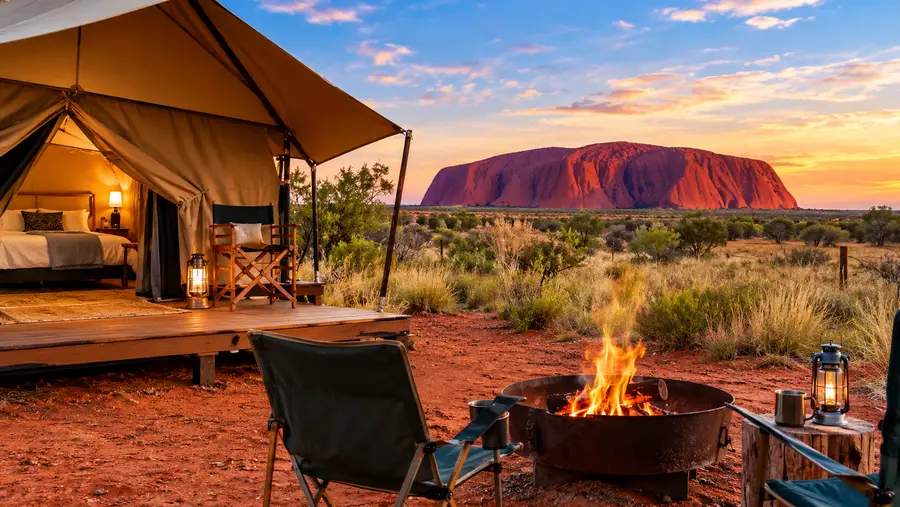
Uluru glamping occupies a totally different planet from self-pitch camping. If the idea of red dust in your bedding makes you shudder, Longitude 131 represents the pinnacle of luxury wilderness lodging anywhere in Australia.
The property consists of sixteen elevated tented pavilions set among rust-red sand dunes. The walls are canvas, but the floors are polished timber, the king-size beds feature fine linen, and floor-to-ceiling glass windows look out directly across the spinifex plains toward Uluru. You wake up, press a bedside button to draw the motorized blinds, and watch the sandstone glow violet without setting foot outside your climate-controlled bedroom.
Staying here is fully inclusive. Guides take you through private tours of the park, meals are crafted by high-end chefs, and top-shelf Australian wines flow freely at sunset on the outdoor dune-top deck. It costs thousands of dollars per night with strict minimum-night policies. It is not an alternative for traditional campers trying to upgrade a weekend trip. It is a bucket-list safari experience tailored for luxury tourists.
A few mid-tier safari-style tents pop up occasionally through independent multi-day tour operators who manage permanent camp plots near Yulara. If you book an organized desert trip, you often sleep in raised platform tents with canvas zip-up doors and communal showers rather than an unassisted swag on the ground.
Essential Tips for Red Centre Camping
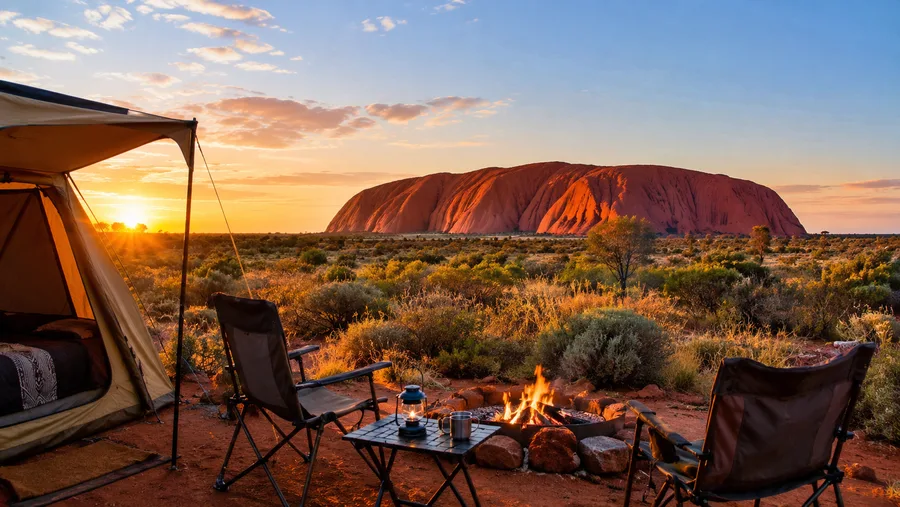
The desert climate catches people off guard. Summer temperatures regularly push past 40°C, turning vehicle cabins into ovens and making tent camping miserable between November and March. Winter brings cloudless blue skies and pleasant 20°C afternoons, but the mercury plummets dramatically the moment the sun dips below the horizon. July and August nights routinely drop below freezing, coating swags in crisp desert frost.
Before packing your vehicle, review the seasonal realities outlined in our guide to the best time to visit Uluru to avoid weather extremes. A sleeping bag rated for five degrees will leave your teeth chattering all night in the middle of winter.
Pack carefully for the conditions:
- Dense sub-zero bedding: carry a winter-rated sleeping bag, thermal base layers, and an insulated mattress pad that stops the ground from draining your body heat.
- Robust steel ground stakes: desert earth is notoriously tough, so heavy-duty screw pegs or hardened steel spikes are mandatory for high winds.
- Sealed storage boxes: store dry food in hard plastic tubs with latching lids to deter bold crows and native mice from chewing through bags.
- Large water jugs: desert air is dry enough to dehydrate you without sweating, so carry at least five liters per person per day for drinking and dishwashing.
Crows around the campground have figured out zip closures and cardboard boxes. If you leave a loaf of sandwich bread on an outdoor camp table while walking to the amenities block, it will be gone by the time you walk back. Keep everything locked inside your vehicle or a durable latching chest. Dingos also roam the area occasionally. They look like lanky domestic dogs, but they are opportunistic wild predators. Never leave food scraps near your tent door, and pack garbage bags directly into the communal park bins before climbing into bed for the night.
Frequently Asked Questions about uluru camping
Can you camp inside Uluru-Kata Tjuta National Park?
No. Camping inside the national park boundary is strictly prohibited to protect the cultural environment and fragile desert ecosystems. All official camping occurs just outside the park gates at Ayers Rock Campground in Yulara or on private stations further down the highway.
Do I need to book the Ayers Rock Campground in advance?
Yes, advance reservations are critical if you are visiting between May and September. Powered sites and cabins often sell out months ahead during the peak winter travel window. Unpowered tent spaces offer a little more flexibility, but pre-booking online guarantees entry at the gate.
Are campfires permitted at the Uluru campground?
Open ground campfires are completely banned throughout the campground to prevent bushfires and protect native timber. The park management occasionally permits raised, enclosed portable fire pits in specific vehicle areas during cooler months, provided guests supply their own commercial firewood.
Is there free camping near Uluru?
There is no free camping within the national park or the resort town of Yulara. The closest legal, free unpowered camping area is at Curtin Springs Station, situated about 100 kilometers east along the Lasseter Highway.
Quick Reference
- Campground location: Yulara Drive, 15 km from national park gate
- Main provider: Ayers Rock Campground (Voyages Indigenous Tourism Australia)
- Closest free camping: Curtin Springs Station (100 km east)
- Peak travel season: May through September
- Park entry requirement: separate Parks Australia pass required for all visitors
Book your australia uluru tour experience:
Before You Pack the Swag
Camping around the Red Centre is one of the most rewarding ways to absorb the scale of Central Australia. You will spend quiet nights watching shooting stars slice through crisp desert air, cook breakfast while cold wind rustles the mulga trees, and stand under the monolith before tourist buses arrive from Alice Springs. Pack warm layers, buy durable steel pegs, book your campsite before leaving home, and give yourself enough days to slow down and listen to the red country.
Read more about australia uluru tour.